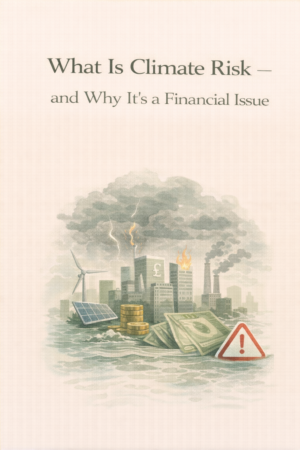
If someone mentions climate risk, our minds immediately begin to picture earthquakes, wild fires, hurricanes and the resultant physical damage caused by these natural disasters. Such events are well documented in the news, and there is no doubt that climate change is accelerating the rate and scale of natural disasters experienced by the planet year after year.
Climate risk in the context of finance is not only the physical disasters caused by climate change. Climate risk is the resultant financial impact that these more frequent disasters are having on the world’s underlying economies. Mortgage rates, insurance premiums, food prices, supply chains, all can be affected by a more volatile climate. As the planet heats up and natural disasters become more frequent, the risk to everything that underpins our way of life increases. In short, climate risk = financial risk.
Types of Climate Risk
Climate risk can be split into the following three categories which are widely recognised across the financial world.
1. Physical Risk
This is the obvious one. It covers physical damage caused by natural disasters which are increasing in frequency and intensity. Physical risks are further sub-categorised into the following:
- Immediate physical risks: sudden one off disasters such as earthquakes, flooding and wildfires that damage buildings and infrastructure.
- Medium term risks: this covers longer term environmental changes such as rising sea levels, droughts etc.
The financial impact to these events are more evident. For example, insurance is hit hard and needs to compensate with higher premiums, or even refusal to insure at all. Ultimately, the increase in risk needs to be priced in which hits both companies and individuals pockets.
2. Transition Risk
The world is changing. Whether through force of regulation, or a natural change in the flow of consumers’ money, there is a green transition happening now. But change can be painful.
Through changing regulations and new green targets, companies will need to adapt. As the transition continues, it is likely that those companies who fail to modify their behaviours to a more sustainable approach could face extinction. Some sectors will, and already are, shrinking. And for those companies that do try to adapt, it will come at a cost. Examples of transition risk include:
- Legal and regulator changes: increase regulatory burdens on companies increase complexity and cost making it harder for businesses to succeed.
- Change in consumer habits: if more consumers move to purchase electric cars, or opt for fueling their house with renewable energy, traditional suppliers will suffer.
- New technology: what happens to old infrastructure and suppliers when new tech comes in?
Business needs to carefully plan for the transition. Moving early to get ahead of the game could mean bad decisions or spending too much money as we move through uncharted waters. Move too late and you may fall behind your competitors.
3. Liability Risk
Climate litigation is increasingly coming into the spotlight, as companies and even governments are being sued for a part they may have played in damage caused by climate change. Where large companies fail to take into account how their operations are adversely affecting the planet, we can expect to see an increase in lawsuits.
New frameworks have emerged, such as the Task Force on Climate-related Financial Disclosures (TCFD) and the IFRS Sustainability Standards have been put in place to ensure companies disclose the impact of their operations on the environment, allowing investors to more easily make decisions on whether to invest in a company.
4. Reputational Risk
If a company fails to truly adopt a green outlook, or even worse, falsely portray itself as green, this could significantly backfire. This would result in a loss of trust as a brand in a world looking towards sustainable opportunities.
5. Operational Risk
An extension of physical risk. Operational risk is the direct impact on logistical operations of running a business due to an increasingly unstable environment due to climate change. Storms, hurricanes, flooding etc make it harder for companies to operate logistically, affecting their ability to deliver value.
Why it Matters
Climate risk is not a choice a firm can decide to embrace or not. Unlike ESG which companies may or may not choose to embrace, climate risk has definite financial impact to banks, insurance companies and investment firms right now. National governments need to understand how a natural disaster may affect their country’s economy should they need to step in relief. Insurance companies must factor these into their stress testing models as well for similar reasons. For investors, it means understanding how the world is changing as the planet heats up, and will factor into decisions where risks exist now versus opportunities to take advantage of. For individuals, it means carefully choosing where to live. Buying the home in an area prone to natural disasters may mean it is impossible to obtain insurance. We already see this in parts of Australia for example where there is a high risk of wildfires. For the young, it means selecting a career that will still exist as they grow. Learning how to manufacture solar panels for example may be a better choice compared to working with a carbon based industry.
Conclusion
Climate risk is here and already changing the way finance works on a global level. What it means to all of us, as individuals, businesses or governments, is that we must factor climate risk into our lives. In other words, we need to plan ahead to ensure that our finances, either personally or nationally, can withstand financial shocks that can and will materialise as a result of climate change. If we plan ahead as new risks emerge, then we can prosper, failure to act with foresight could spell financial disaster.